
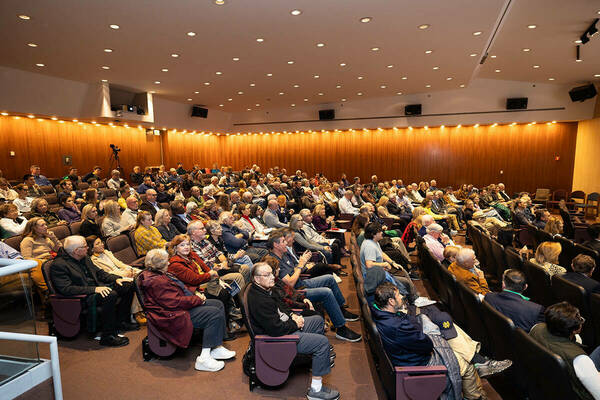
“To kill free speech is to kill science,” declared Dr. Jay Bhattacharya to a packed audience in Carey Auditorium as he opened his November 15, 2024 lecture. The event, co-sponsored by the Center for Citizenship and Constitutional Government and the College of Science, carried a title that reiterated the message of the lecturer's opening statement, “The End of Free Speech is the End of Science.”
Along with being tapped to lead the NIH by President-elect Donald Trump, Bhattacharya is a Stanford professor with dual doctorates in medicine and economics, as well as a research associate at the National Bureau of Economic Research and the director of Stanford’s Center for Demography and Economics of Health and Aging. With over 135 peer-reviewed articles published across fields like health policy, epidemiology, and economics, he is known for his controversial but data-driven critiques of COVID-19 policy responses.
Dr. Bhattacharya engaged attendees with his firsthand experiences as a scientist with a “front row seat” to the pandemic. Reflecting on his role as both a researcher and public critic of lockdown measures, he argued that open debate is essential to scientific progress—and that its absence during the pandemic led to avoidable suffering worldwide.
Dr. Bhattacharya recalled how, in the early days of the pandemic, his research suggested that the disease was spreading far more rapidly than initially thought. Drawing on data from China, he hypothesized that a significant proportion of the population was already infected but remained undiagnosed due to limited testing. This potential discovery prompted him, “in a fit of madness,” to write his first-ever op-ed, published in The Wall Street Journal, challenging the World Health Organization’s (WHO) projections of the virus's fatality rate.
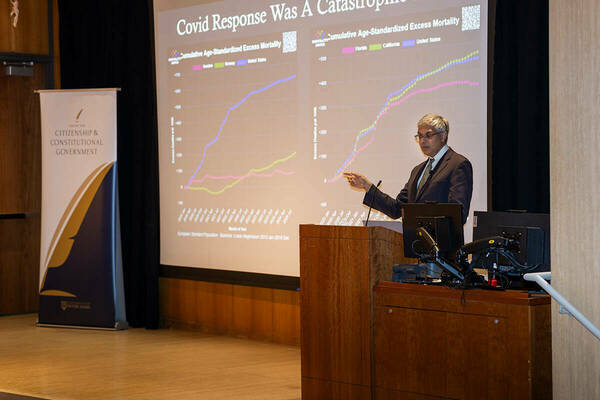
Through studies conducted in Santa Clara and Los Angeles Counties, Dr. Bhattacharya and his colleagues found that approximately 3-4% of the tested population had COVID-19 antibodies. These results indicated that the virus was much more widespread than previously reported, suggesting a lower fatality rate—around 2 per 1,000 cases, rather than the 3 per 100 initially estimated by the WHO.
Additionally, data revealed that younger individuals were at a significantly lower risk of severe outcomes, leading Dr. Bhattacharya to advocate for a targeted public health response that prioritized the protection of the elderly and could therefore mitigate both COVID-19 and the collateral damage caused by lockdowns.
Dr. Bhattacharya criticized the global adoption of strict lockdown measures, arguing that these policies had devastating, far-reaching effects, particularly on vulnerable populations in poorer countries. He highlighted reports of severe collateral damage that “should shock the conscience and heart,” pointing to rising rates of starvation, disrupted education, and increased poverty.
He detailed how, in countries like India, millions of migrant workers were forced to leave cities, often traveling on foot back to their villages with no way to make a livelihood. On the day that this lockdown was announced “a thousand died on route” with more suffering to come.This displacement, combined with economic shutdowns, exacerbated poverty levels and reversed years of progress in reducing global poverty.
The impact on children, he argued, was especially dire. Dr. Bhattacharya referenced UNICEF data from 2023 showing that school closures led to “the largest continuous decline in childhood vaccinations in 30 years,” with millions of children missing out on essential education as well. In developing countries, where virtual learning was not a viable option, entire generations were set back. He shuddered at the harrowing choices faced by impoverished parents, some of whom were forced to decide between letting their children starve or selling them into labor or exploitation. Dr. Bhattacharya stressed that these lockdown policies were implemented “on the backs of children.”
According to Dr. Bhattacharya, the fallout from lockdown policies extended far beyond developing countries, affecting even the most stable and affluent nations. He underscored how these lockdown measures led to severe mental health crises, missed cancer screenings, surging drug overdoses, and heightened rates of domestic violence. Lockdowns “diverted resources away from these necessary things,” argued Dr. Battachrya, explaining how these consequences of lockdowns were indiscriminate, cutting across all demographics and leaving no community untouched.
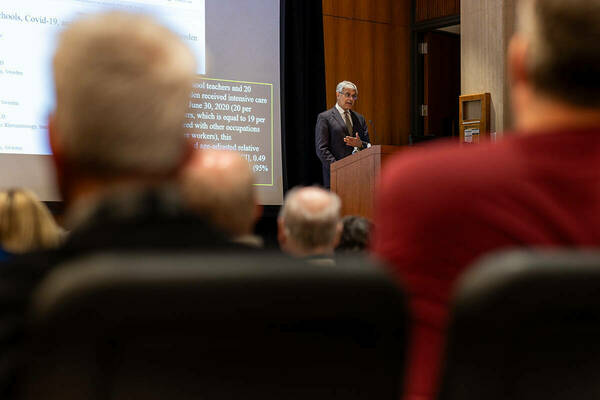
To illustrate the ineffectiveness of lockdowns, Dr. Bhattacharya often pointed to the case of Sweden, where public health authorities abandoned full lockdowns and kept schools open for children under 16. Despite these policies, Sweden’s mortality rates were comparable to neighboring countries that implemented stricter measures. Moreover, Swedish children who attended school showed no significant increase in severe COVID-19 outcomes compared to their peers in countries with closed schools. Dr. Bhattacharya argued that this evidence demonstrated the viability of alternative strategies focused on “protecting the most vulnerable populations” rather than imposing blanket restrictions.
In October 2020, Dr. Bhattacharya co-authored the Great Barrington Declaration, advocating for a strategy of “focused protection” rather than widespread lockdowns. This document argued that public health measures should aim to protect high-risk groups while allowing others to resume normal life, thereby reducing both COVID-19 deaths and the collateral damage of lockdown policies.
The release of the Great Barrington Declaration sparked intense backlash, and Dr. Bhattacharya faced mounting pressure, both professionally and personally. At Stanford, he endured hostility from colleagues and a “fact-finding” investigation aimed at disputing his credibility. He explained how he thought he was going to lose his job due to “an allegation I knew to be false and was ultimately found to be false.” Despite the difficult situation, he remained resolute, driven by a belief that science could not thrive without free speech. He saw it as an obligation.
Dr. Bhattacharya also highlighted the issue of social media censorship. Shortly after joining Twitter, he discovered he had been placed on a “blacklist” that restricted his posts’ visibility. He described this censorship as “the pressure to suppress any information that contradicts public health authority.” Undeterred, he continued to speak out, even as government agencies allegedly pressured tech companies to silence dissent.
He argued that such suppression created a false illusion of consensus around lockdown policies, effectively stifling the critical debate essential for sound science. Reflecting on the consequences of this approach, he remarked, “And it's no wonder we have among the worst outcomes in the world for COVID.”
In his closing remarks, he urged the audience to embrace disagreement rather than cancel those with differing views. “Science is dead without free speech,” he concluded. “What you have instead is dogma.” For Dr. Bhattacharya, the fight to protect open discourse is vital to the future of science.
The full recording of Dr. Bhattacharya's remarks can be viewed on our YouTube channel. To stay in touch with the Center for Citizenship and Constitutional Government and be the first to know about upcoming events, subscribe to our mailing list here.